
While conditions have improved over the last decade in western UP, there are still unfulfilled needs.

In 2025 alone, at least 50 suicides linked to online gambling losses have been reported across India. According to FIRs, the victims were addicted to betting, largely driven by cricket, rummy and poker.

Maharashtra Deputy Chief Minister Eknath Shinde on Monday attributed early arrival of the southwest monsoon and heavy rainfall in a short span for the inundation of low-lying areas in Mumbai, which disrupted road and railway traffic.

As more companies ask their employees to return to office after the pandemic, the share of women employed in regular salaried jobs in urban India decreased from 54 per cent in the first quarter to 52.8 per cent in the second quarter of the current financial year, according to the quarterly Periodic Labour Force Survey (PLFS) data. The slump in the share is the lowest in wage employment in any quarter in the last six years when the National Statistical Office started releasing the quarterly PLFS surveys in Q3 of FY19. The share of women in wage work was highest in Q1 of FY21 at 61.2 per cent.

India's urban unemployment rate declined in Q4FY23 to 6.8 per cent - the lowest in over four years -- after it stagnated at 7.2 per cent in the previous October-December quarter, reflecting improvement in the labour market, according to the Periodic Labour Force Survey (PLFS) released by the National Statistical Office (NSO) on Monday. The unemployment rate in current weekly status (CWS) terms for all ages in the March quarter was the lowest recorded in more than four years, from the time the NSO released India's first quarterly urban jobless rate for the December quarter in 2018. The jobless rate in urban areas had been on a continuous decline since the peak of 20.8 per cent in the April-June quarter of FY21.

The majority of these calls originate from foreign-based gangsters or their associates, using Voice Over Internet Protocol or international phone numbers, they said.

AIADMK leader Edappadi K Palaniswami is under pressure from his party as his unclear stand on the BJP alliance has brought back fears among party workers that the party may lose its identity, be forced into an unwanted coalition, and be taken over by the BJP later, observes N Sathiya Moorthy.

Census exercise with caste enumeration will be carried out with the reference date of October 1, 2026, in snow-bound areas like Ladakh and of March 1, 2027, in the rest of the country, the Home Ministry announced on Wednesday.

India's economy grew 7.6 per cent in the September quarter of this fiscal and remained the fastest-growing large economy, mainly due to better performance by manufacturing, mining and services sectors, the government data showed on Thursday. The gross domestic product (GDP) expanded by 6.2 per cent in the July-September quarter of 2022-23. India remained the fastest-growing major economy, as China posted a 4.9 per cent growth in July-September 2023.

Retail inflation declined to a one-year low of 5.72 per cent in December 2022, mainly due to softening prices of food items, according to official data released on Thursday. The Consumer Price Index (CPI) based retail inflation was at 5.88 per cent in November 2022 and 5.66 per cent in December 2021.

The Indian economy is estimated to grow at 7 per cent in the 2022-23 fiscal, down from 8.7 per cent a year ago, mainly due poor performance of mining and manufacturing sectors. As per the first advance estimates of national income released by the National Statistical Office (NSO) on Friday, the manufacturing sector output is estimated to decelerate to 1.6 per cent in the current fiscal from 9.9 per cent in 2021-22. Similarly, mining sector growth is estimated at 2.4 per cent in the current fiscal as against 11.5 per cent in 2021-22.

Indian students at Harvard, on condition of anonymity, shared their concerns and experiences of the last few months during which the prestigious university has seen relentless attacks by the Trump administration.

India's economic growth accelerated to 8.4 per cent in the third quarter of 2023-24, mainly due to good performance by the manufacturing, mining & quarrying and construction sectors. The Indian economy recorded a growth of 8.4 per cent in the third quarter of this fiscal (October-December 2023), according to data released by the National Statistical Office (NSO) on Thursday.

While the country's unemployment rate is falling, the quality of employment seems to have taken a hit. The pace of formalisation slowed in the five months of the current financial year (April-August) with more than half a million fewer formal jobs created in the period compared to the same period last year, according to data from the Employees' Provident Fund Organisation (EPFO). The payroll data showed that cumulatively 4.92 million new subscribers joined the social security organisation between April-August this year, compared to 5.51 million subscribers in the same period in the previous year, reflecting a 10.7 per cent decline in the number of new payrolls created.

Industrial production re-entered the negative territory by contracting 1.6 per cent in January, mainly on account of the decline in output of capital goods, manufacturing and mining sectors. The output of the manufacturing sector -- which constitutes 77.6 per cent of the Index of Industrial Production (IIP) -- shrank by 2 per cent in January, as against a growth of 1.8 per cent during the same month last fiscal, as per data released by the government on Friday. The worst performance was witnessed by the capital goods sector, which recorded a contraction of 9.6 per cent during the month under review, compared to a 4.4 per cent decline a year ago.

India's unemployment rate fell to a six-year low of 3.2 per cent in the July-June 2022-23 period, down from 4.1 per cent in the same period the previous year, according to the latest annual Periodic Labour Force Survey (PLFS) report. The report, released by the National Statistical Office (NSO) on Monday, showed a decline in unemployment rates in both rural and urban areas during the 2022-23 period to 2.4 per cent and 5.4 per cent, respectively, from 3.2 per cent and 6.3 per cent in the 2021-22 period. The unemployment rate for rural women (1.8 per cent) was lower than that for rural men (2.7 per cent) in 2022-23; in urban areas, the rate was higher for females (7.5 per cent) compared to males (4.7 per cent).

While acknowledging that they needed strong allies for a chance in the assembly polls, AIADMK cadres seemingly prefer actor-politician Vijay's Tamilaga Vettri Kazhagam to the BJP, owing to the latter's 'communal agenda' and consequent hardline Hindutva image, explains N Sathiya Moorthy.

The Indian Navy has appointed the first woman commanding officer in a naval ship in sync with its philosophy of 'all roles-all ranks' for female personnel, Navy Chief Admiral R Hari Kumar said on Friday.

In May 2019, the food inflation was 1.83 per cent as per the full CPI data released for that period.


In the jobs created in 2022, the share of those in the age group 18-25 increased to at least a five-year high of 56 per cent. A Business Standard analysis of the monthly Employees' Provident Fund Organisation (EPFO) payroll data shows in 2018 the share of youths among the new EPFO subscribers was 50.9 per cent. The National Statistical Office is releasing the monthly EPFO payroll data since April 2018 as part of the government's effort to track formal-sector employment by using payrolls as an instrument.
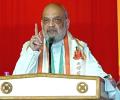
Union Home Minister Amit Shah has refuted claims made by Tamil Nadu Chief Minister M K Stalin regarding fund allocation and delimitation, accusing him of spreading misinformation and engaging in diversionary tactics. Shah asserted that the Modi government has provided significant financial support to Tamil Nadu and denied claims of any reduction in Parliamentary representation for the state following delimitation. He also criticized the DMK government's handling of law and order, citing issues such as drug trafficking and corruption. Shah expressed confidence in the BJP's prospects in the upcoming Assembly elections, predicting a larger victory than in Maharashtra and Haryana.
Retail inflation jumped to a 15-month high of 7.44 per cent in July as prices of vegetables and other food items spiked, according to official data released on Monday. The Consumer Price Index (CPI) based inflation was at 4.87 in June and 6.71 per cent in July 2022. Previously, high inflation was recorded at 7.79 per cent in April 2022.
The internals of the food inflation are worrying, given a broad-based uptick across categories that tend to be sticky, such as proteins, and a narrower-than-expected reduction in inflation for vegetables.

The government may be staring at a modest slippage in fiscal deficit for 2022-23 (FY23), with the Ministry of Finance seeking parliamentary approval for additional spending through a second and final tranche of supplementary demands for grants. On Monday, as the Budget session of Parliament resumed, Finance Minister Nirmala Sitharaman sought Parliament approval for additional gross spending of Rs 2.7 trillion in FY23 (which ends on March 31). While net cash outgo is pegged at Rs 1.48 trillion, the rest will be matched by savings or enhanced receipts, the finance ministry said.

India's decadal census is likely to be further delayed after the budget allocated only Rs 574.80 crore for the exercise, a significant reduction from previous years. The census, originally scheduled for 2021, has been postponed due to the COVID-19 pandemic, and the government has not yet announced a new schedule. The budget allocation suggests that the exercise may not be carried out even after the delay. The upcoming census will be the first digital census, allowing citizens to self-enumerate using a dedicated portal. The exercise will be made compulsory for citizens who wish to self-enumerate, and Aadhaar or mobile numbers will be required. The census will include questions on household demographics, amenities, and economic status.

While data can empower communities, it reinforces identities, making local politics more caste-centric, with decisions increasingly contested on the grounds of representation.
Such dynamics could lead to shifting alliances and, in the worst case, local governance getting paralysed as each group demands proportional power-sharing, explain Amitabh Kundu and Mehebub Rahaman.

As per the data released by the NSO, the overall food inflation rose to 14.12 per cent in December as against (-) 2.65 per cent in the same month of 2018.

Indian Americans contribute approximately 5% to 6% -- roughly $300 billion -- in federal tax revenues annually.
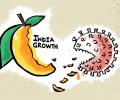
The economic growth may have slowed to 3.5 per cent in fourth quarter of 2021-22 from 5.4 per cent in the previous three-month period due to the impact of higher commodity prices on margins, decline in wheat yields and on higher base, Icra Ratings said on Monday. The agency said the hiccups in the recovery of the contact-intensive services attributable to the third wave of Covid-19 in the country may have also affected the economic growth in the quarter. Even the gross value added (GVA) at basic prices (at constant 2011-12 prices) in Q4 FY2022 seems to have eased to 2.7 per cent from 4.7 per cent in Q3 FY2022, it said.

Retail inflation declined to an 18-month low of 4.7 per cent in April mainly due to falling prices of vegetables, oils and fats, and came closer to Reserve Bank's target of 4 per cent, showed government data released Friday. It was for the second month in a row that Consumer Price Index (CPI) based inflation remained within the RBI's comfort zone of below 6 per cent. The government has tasked the central bank to ensure retail inflation remains at 4 per cent with a margin of 2 per cent on either side.

India's economic growth slowed to 3.1 per cent in January-March and to an 11-year low of 4.2 per cent for the full fiscal 2019-20 amid a drop in consumption and investment. The Gross Domestic Product (GDP) growth stood at 5.7 per cent in the corresponding quarter of 2018-19, according to data released by National Statistical Office (NSO) on Friday.

The central government is likely to further consolidate its fiscal deficit by 50 basis points (bps) to 5.9 per cent in FY24 from 6.4 per cent in FY23, according to a recent report released by Goldman Sachs on Tuesday. In the current fiscal year, there is going to be an upside of 0.5 per cent on the receipts side due to higher nominal GDP growth, and higher tax buoyancy because of the formalisation, the report said. The upside to expenditure is mainly going to come from incremental subsidies (0.8 per cent of GDP), in both food and fertilizer, it said. The upcoming pre-election Budget will carry forward the trend of the increased capital expenditure seen in recent years.

Gross enrolments of new subscribers with ESIC were 1.49 crore during the entire financial year 2018-19, the National Statistical Office (NSO) said in a report.

Gross enrolments of new subscribers with the ESIC were 1.49 crore during 2018-19.

India's industrial production contracted by 4 per cent in October, the sharpest fall in 26 months, mainly due to decline in output of manufacturing and subdued performance of mining and power generation sectors, according to official data released on Monday. The Index of Industrial Production (IIP) had grown 4.2 per cent in October 2021. The previous low was (-) 7.1 per cent in August 2020.

As a well-wisher of the Indian Statistical System and part of the system for more than 37 years, Sunil K Sinha, former DG and CEO of NSSO, offers suggestions to improve data quality.

The pre-budget Economic Survey, which is tabled in Parliament ahead of the Union Budget to present the state of the economy and suggest policy prescriptions, quite often misses on the GDP forecast, sometimes by a significant margin. This time, Finance Minister Nirmala Sitharaman will table the Economic Survey for 2021-22 in the Lok Sabha on Monday soon after the President's address to both Houses of Parliament. She will present the Union Budget for the next financial year beginning April 1, 2022, on Tuesday.
The retail inflation, which is factored in by the RBI to arrive at its monetary policy, has been on decline since last month. The previous low was 5.54 per cent in November 2019. The government has asked the RBI to restrict the inflation around 4 per cent, with a margin of 2 per cent on the either side.

Elevated food price-led inflation could become a sore point for markets, which they seem to be ignoring at current levels, observe analysts. Retail inflation in India - as measured by the Consumer Price Index (CPI) - came in at a three-month high of 6.52 per cent in January 2023, compared with 5.72 per cent in December and 5.88 per cent in November 2022. The inflation print for February, according to Madan Sabnavis, chief economist at Bank of Baroda, will be critical for the Reserve Bank of India's monetary policy committee.
